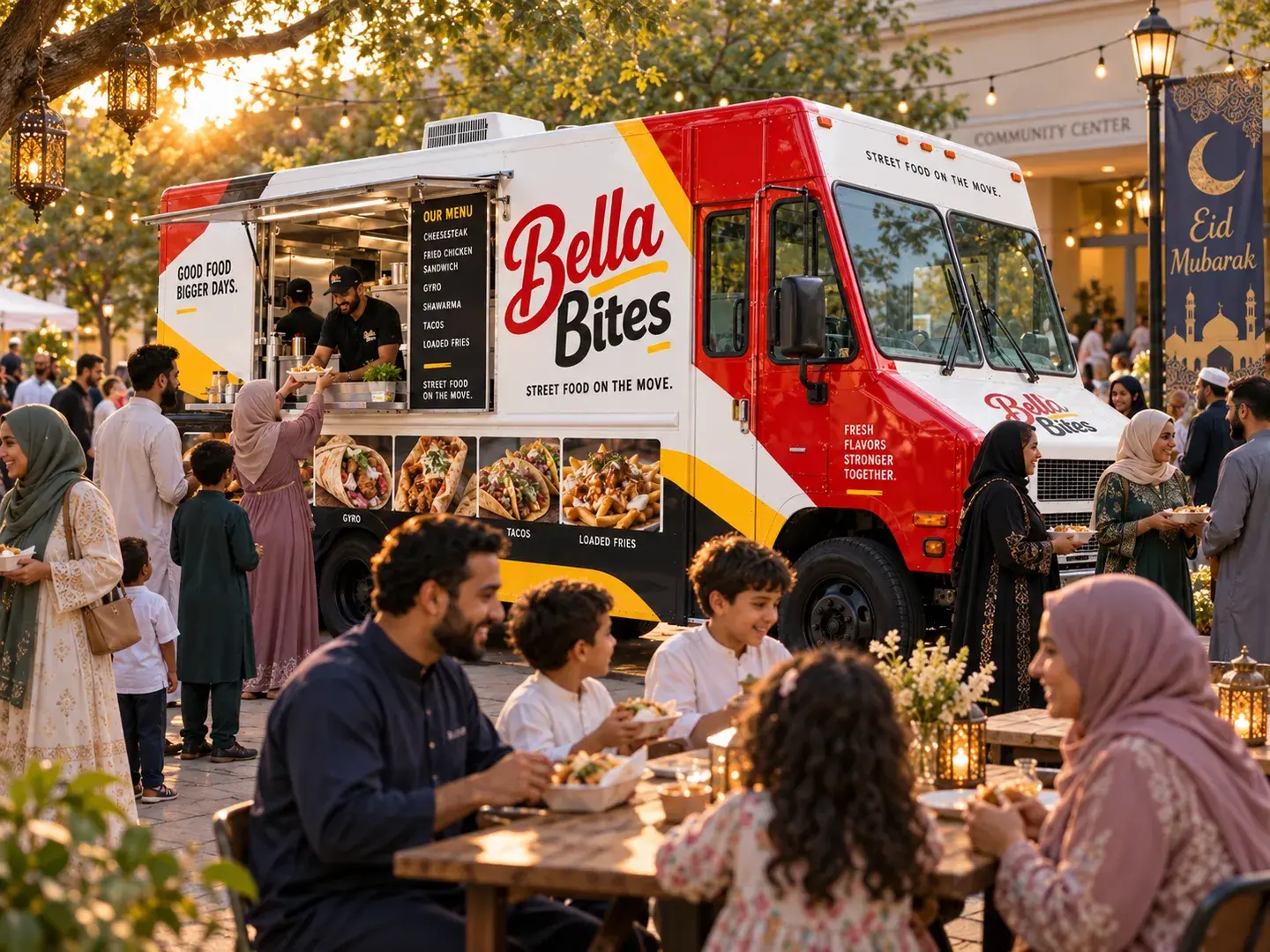
Most events have a fixed date and a loose start time. Eid and iftar flip that around. Eid al-Fitr can land on one of two days, and you may not know which until the night before. An iftar has a date you know for weeks and a start time measured to the minute: sunset.
A food truck can handle both, as long as you plan for the timing problems up front.
Why the date moves
The Islamic calendar is lunar. Each month runs 29 or 30 days, and traditionally a month begins when the new crescent moon, the hilal, is first sighted after sunset. Because sightings depend on weather and location, start dates can differ from one country to the next, and some countries use astronomical calculation instead (Wikipedia: Islamic calendar (opens in a new tab)).
In North America, the Fiqh Council of North America sets dates by calculation, using published criteria about the moon’s angle and height at sunset (FCNA calendar (opens in a new tab)). Other mosques wait for a local or regional sighting. In the DC area, that means two neighboring communities can celebrate Eid a day apart, and both are following their own scholars.
Booking around an uncertain Eid
Eid al-Fitr is the hard one, because it depends on when Ramadan ends. Eid al-Adha is easier: it falls on the 10th of Dhul Hijjah, so once that month begins, you have about ten days of notice.
- Tell the operator up front that the date depends on the moon, and name both possible days.
- Ask whether they can hold both days and release one once the date is confirmed, and what that costs.
- If your community follows calculation, book the fixed date and skip the worry.
- Plan an afternoon open house instead of a morning event. Eid prayer happens in the morning, and an afternoon start gives the truck time to arrive after the date is settled.
Timing an iftar to the minute
Iftar is the meal that ends the day’s fast during Ramadan, timed to the Maghrib call to prayer around sunset. Breaking the fast traditionally starts with dates and water (Wikipedia: Iftar (opens in a new tab)). Then many people pray Maghrib before they eat a full meal.
That gives an iftar three beats: a quick bite at sunset, a short break for prayer, then the real meal. Plan the truck around the third beat.
Before sunset
Have the truck parked and set up well before sunset, with the grill hot. Put dates, water and maybe juice on a separate table near the door so nobody has to stand in the truck line to break the fast.
At sunset
Use your mosque’s posted prayer time, not a weather app’s sunset time, since communities follow their own timetables. Sunset moves a little every day during the month, so check it on the day.
After Maghrib
Open the window as people come out of prayer. This is when the rush hits. Everyone has been fasting all day and they arrive at once, so plan the line before you plan anything else.
Keeping a hungry crowd moving
An iftar line does not trickle in the way a birthday line does. People arrive together and they are hungry. A few choices make a big difference:
- Keep the menu to four or five items so orders are quick.
- Pre-sell tickets or hand out cards with dish choices, so people decide before they reach the window.
- Serve families, elders and people with small children first, or give them a separate pickup point.
- Run the line away from the prayer space entrance so people leaving prayer are not blocked.
- Put trash and recycling at the end of the line, with a volunteer nearby.
If your mosque runs separate entrances or spaces for men and women, ask the operator whether a second pickup point can be set up. It keeps both sides of the crowd moving.
What to serve
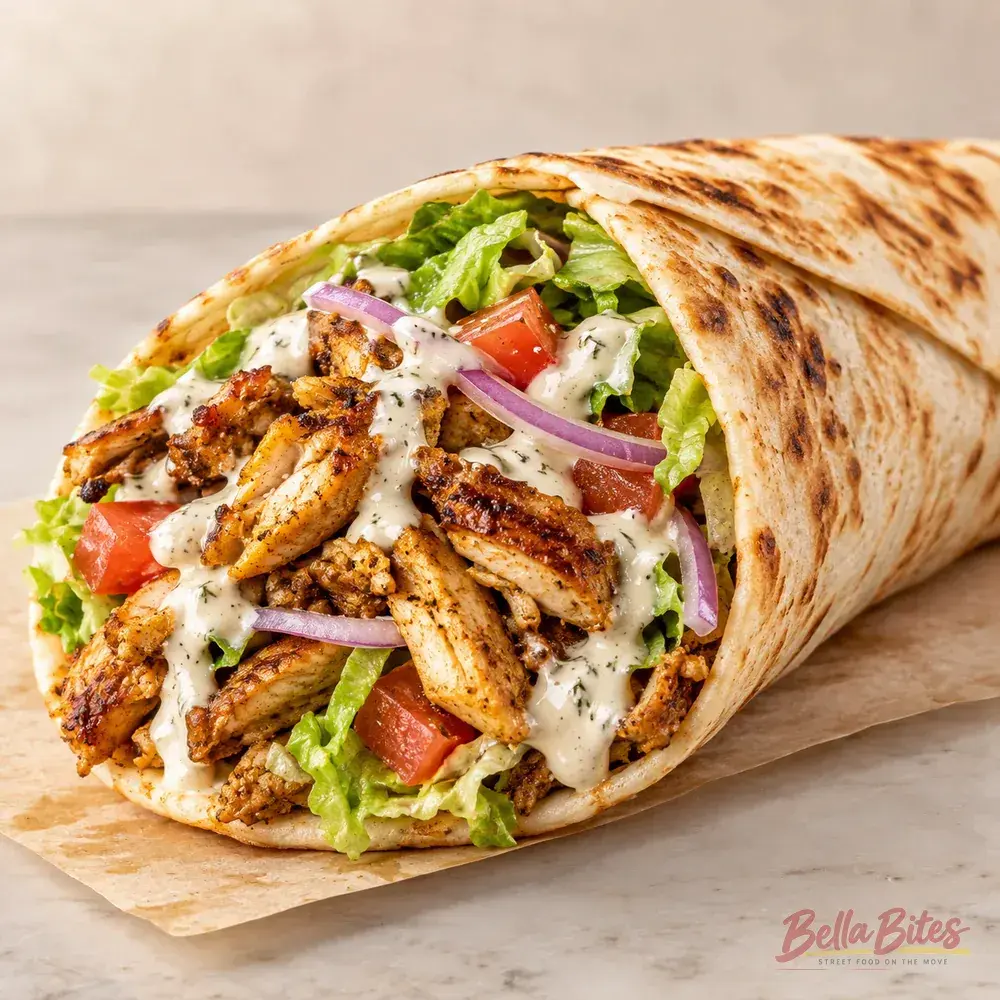
After a day of fasting, people want something warm and filling, with something sweet after. A practical spread: a wrap like chicken shawarma, a lamb dish like the Greek lamb gyro, a vegetarian option, fries for the kids and a sweet such as funnel cake or churros.
Halal is the first requirement, and it should not be a question at an iftar. On the Bella Bites truck the whole menu is halal, but whoever you book, ask about suppliers, shared grills and sauces before the date. Our guide to what halal means at a food truck lists the questions.
What to send your operator
A good request answers the questions the operator would otherwise have to call you about.
- Both possible Eid dates, or the iftar date, and the method your community follows.
- The Maghrib time you will use, or a link to the mosque’s timetable.
- A guess at how many people eat in the first half hour after prayer.
- Whether the community hosts the meal or families pay at the window.
- Where the truck parks, and where the prayer space entrance is.
- Any halal documentation your board or imam wants to see.
For Eid parties at home
A family Eid party in the afternoon is calmer than a community iftar. People drift in over a few hours, kids run around in new clothes, and the truck can cook to order the whole time. A hosted setup works best here so guests never reach for a wallet. If the date is tied to a moon sighting, keep your guest list informed the same way you keep the operator informed.
Expect visitors who have already eaten at two other houses. On Eid al-Adha, many families have cooked meat from their own sacrifice, so sides, sweets and something different from home cooking often go over better than another lamb dish.
Sources
We link the pages we relied on so you can check them yourself. Rules and permits change, so confirm anything local with the office that issues them.