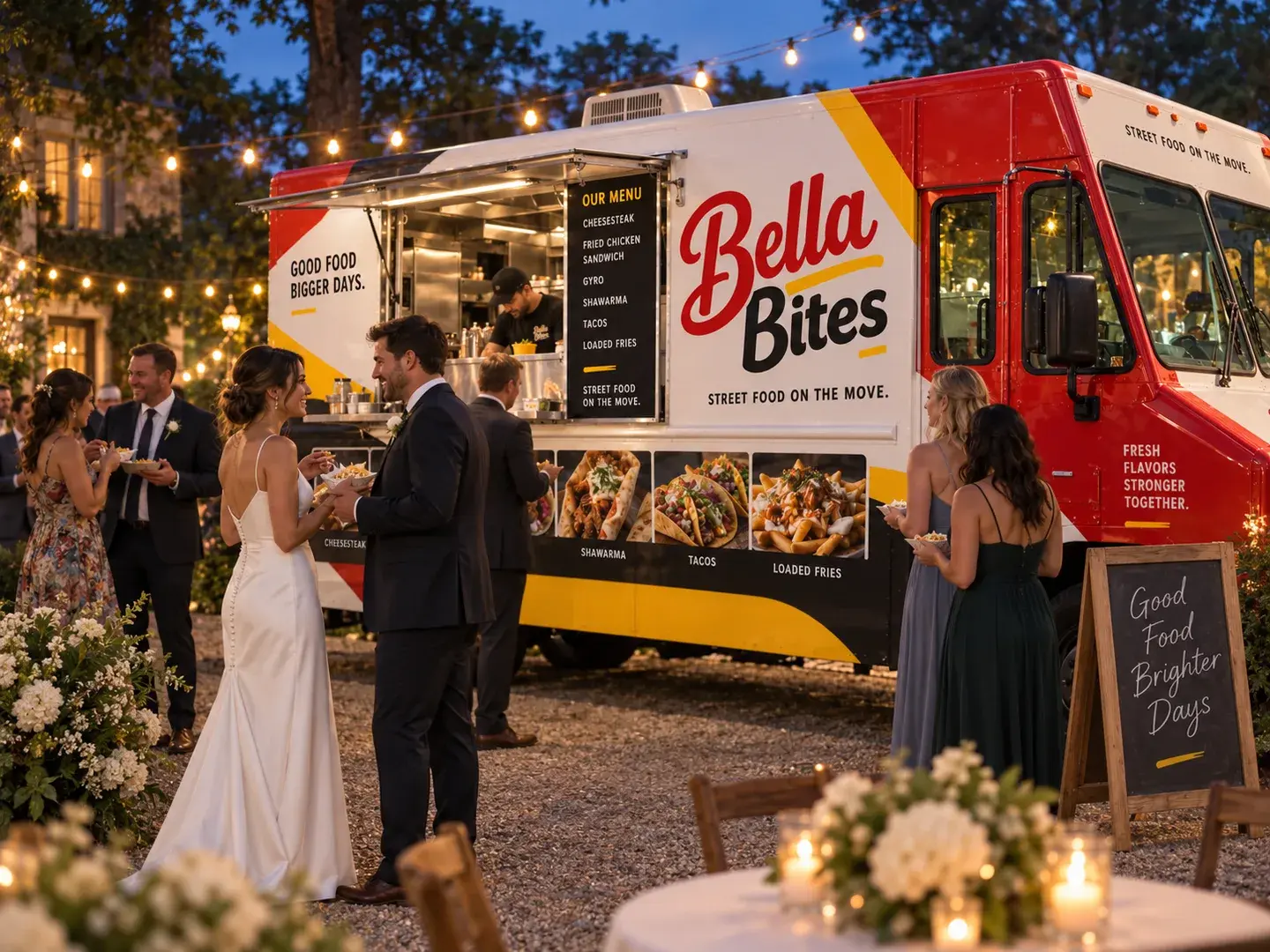
Dinner at a wedding happens early. By the time the dancing peaks, three or four hours later, people are hungry again, and the cake is not cutting it. That is the gap a late-night food truck fills.
Getting it right comes down to three things you can settle months ahead: the timing, the venue rules and the menu.
Talk to the venue first
Some venues have exclusive caterers and do not allow outside food at all. Others allow trucks but have rules: an approved vendor list, insurance requirements, a cutoff time for vendors, or a specific place for the truck to park. Ask your venue coordinator before you contact any truck.
Questions worth asking the venue:
- Are outside food trucks allowed, and is there a fee?
- Where can a truck park, and is the path from the road clear for a large vehicle?
- What insurance does a vendor need, and what wording goes on the certificate?
- What time do outside vendors have to be packed up and gone?
- Is there power available, or should the truck plan for its own?
If you have a planner, loop them in. They will add the truck to the run-of-show and make sure it does not collide with the cake cutting or the send-off.
When to open the window
We suggest opening the window two to three hours after dinner ends, once the dance floor has been going for a while. An hour of service is a sensible starting point, since guests come up in waves between songs.
Have the truck arrive earlier than that to park and heat up quietly. Agree with the DJ or band to announce the truck once, then let word spread on its own.
Keep the menu small and handheld
People are in dresses, suits and heels. They want food they can eat standing, with one hand, without ruining anything. Two or three savory items and one sweet are plenty.
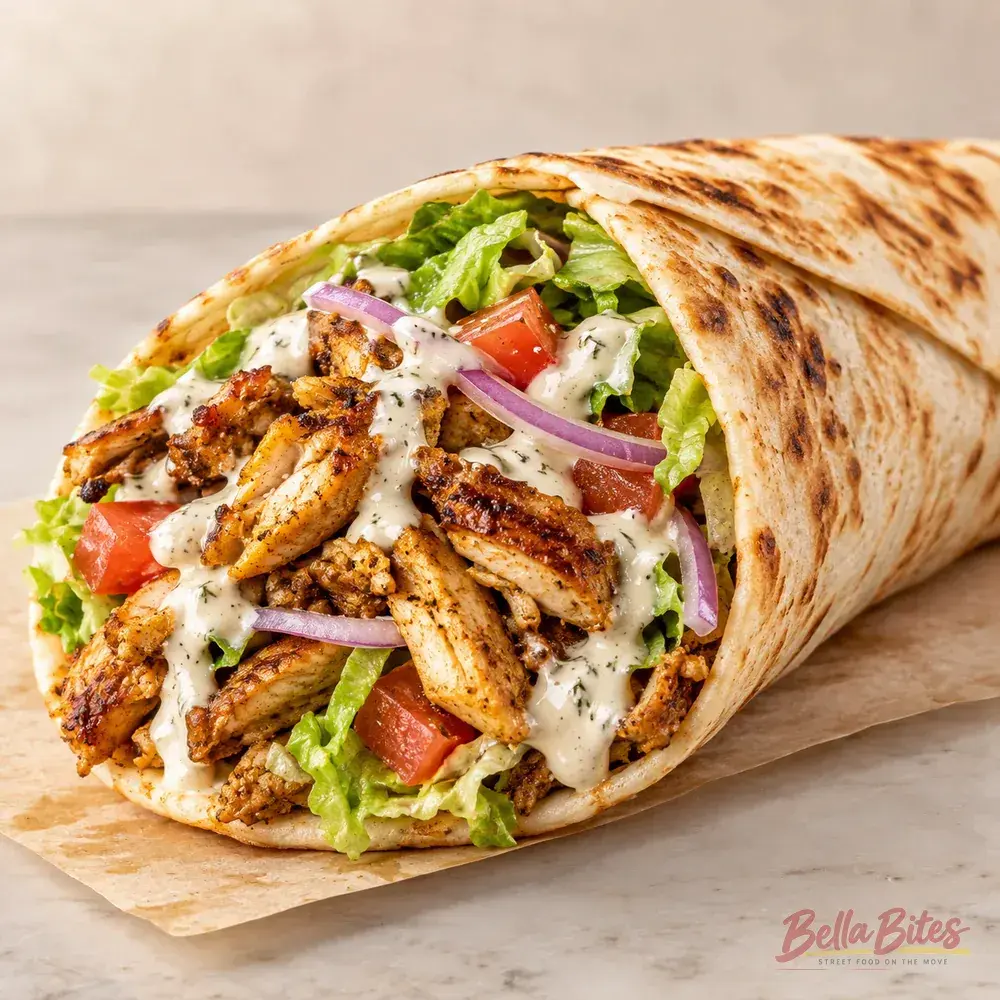
Good late-night picks: steak street tacos, french fries or cheesy fries, and churros for something sweet. Skip anything with a lot of drippy sauce, because drips are hard to hide on formal clothes.
Hosted, always
This is our opinion and we will stand by it: at a wedding, guests should never pay at the window. They already traveled, dressed up and brought a gift. Cover the late-night food in full, the same as dinner.
If budget is the worry, shorten the menu or the serving window instead of asking guests to pay.
Lights, line and location
Late-night means dark. Make sure the truck’s spot has lighting, or bring in string lights so guests are not ordering by phone flashlight. Put the line on a paved path if you can, since grass and heels do not mix.
Park the truck close enough to the reception that guests find it easily, but far enough that generator noise does not compete with toasts. The NFPA food truck safety sheet asks that generators be separated from the public by barriers or guards and that their exhaust stay at least 12 feet from openings, air intakes and exits (NFPA fact sheet (opens in a new tab)). Your operator will know their setup; ask them where the generator sits.
A sample late-night timeline
Every wedding runs differently, but a common shape looks like this:
- During dinner: the truck arrives, parks and sets up out of sight of the head table.
- First dances and toasts: the grill heats up.
- About two hours into dancing: the DJ announces the truck once.
- The next hour or so: guests come in waves between songs.
- Before the send-off: the window closes so the crew is packed up before the venue’s vendor cutoff.
Questions to ask the truck
- Have you worked at our venue before, and do you know its vendor rules?
- How long do you need to set up, and how much room?
- Where does your generator sit, and how loud is it?
- Can you provide a certificate of insurance with our venue’s wording?
- Which of the nine major food allergens the FDA lists are on your menu (FDA (opens in a new tab))?
- What happens if dinner runs late and the timeline shifts?
Rain, vendors and the people who leave early
Plan for rain the same way you plan the ceremony backup. If the truck sits outside and guests are inside, you need a covered path, a stack of umbrellas, or a runner who carries trays in from the window.
Feed your vendors. The photographer, DJ and coordinator work through dinner, and the late-night window is a good time to make sure they eat. Tell the truck crew who they are.
Older guests often leave before the late-night food appears. If that matters to you, ask the crew to send out a first round a little earlier, or plan a small plate to take home.
Halal and mixed families
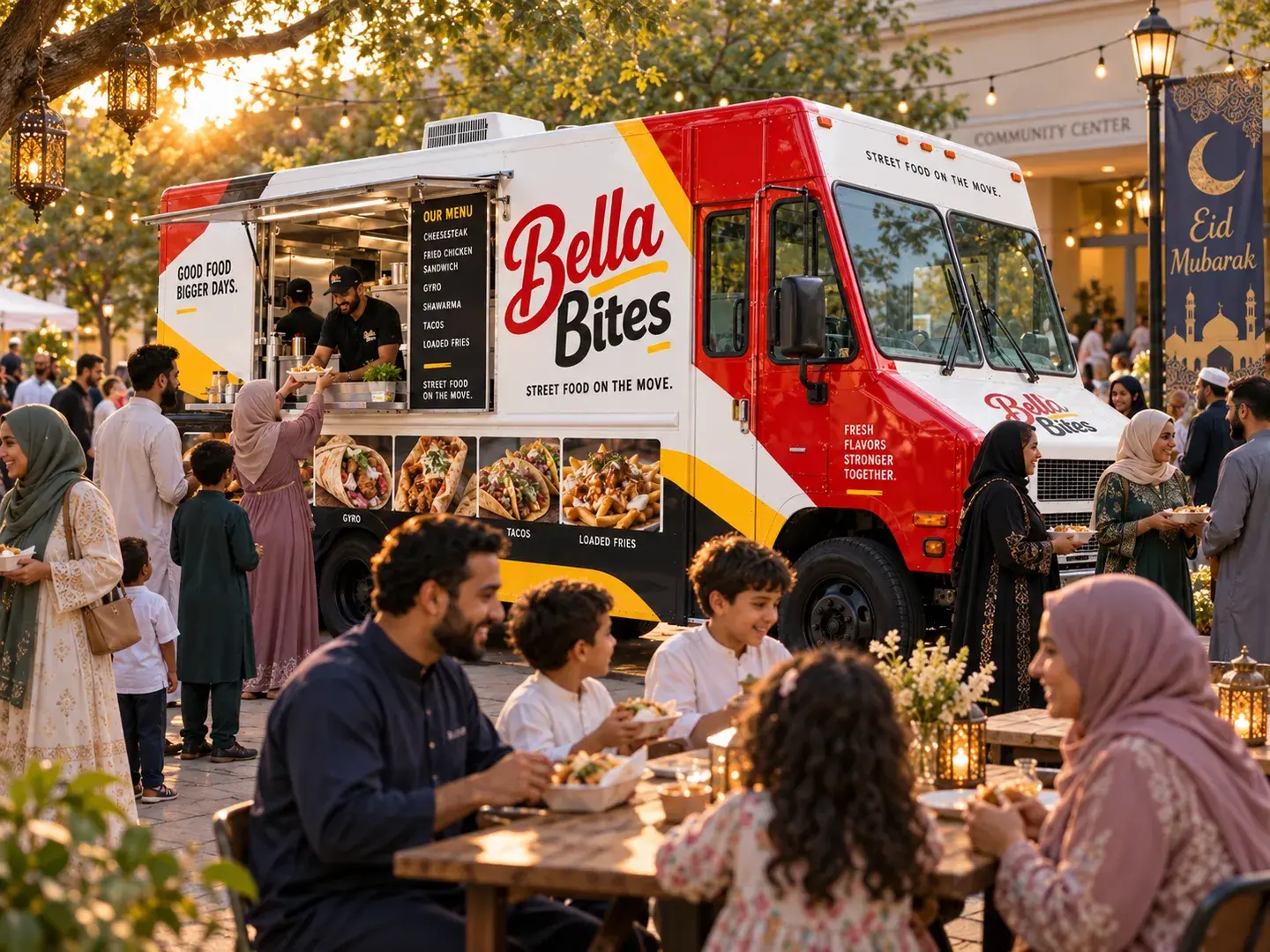
Many DC-area weddings bring together families with different food rules. If some of your guests keep halal, a fully halal menu means nobody has to ask which items are safe. Bella Bites is one option for that: the whole menu is halal, and our wedding page has more on how we fit into a reception.
Questions people ask
Do we still need dinner if we book a late-night truck?
Usually yes. A late-night truck is a second, smaller meal. Some couples use a truck for dinner at a casual outdoor wedding, but that is a bigger booking with a longer serving window, so plan it as the main meal.
How far ahead should we book a truck for a wedding?
As soon as your date and venue are confirmed. Spring and fall Saturdays are popular in the DC area and trucks book up for them.
Sources
We link the pages we relied on so you can check them yourself. Rules and permits change, so confirm anything local with the office that issues them.