A food truck lunch is one of the easier office perks to pull off, and one of the easier ones to get wrong. Most of the trouble happens before the truck arrives: nobody asked the property manager, the garage is too low, or half the team works from home that day.
This guide is for the person who got handed the job. It goes in the order you will deal with things.
Get a yes from the building, in writing
Unless your company owns the building, the property manager decides whether a truck can park on site. Email them early with the date, the hours and where you hope the truck will park. Ask them three things: whether trucks are allowed, which spot they prefer, and whether they need a certificate of insurance from the vendor, with any exact wording.
Expect fire safety to come up: fire lanes, hydrants and distance from the building. Local rules can add a step for the truck itself. In Fairfax County, for example, a truck serving on private commercial property needs a Food Truck Operation Permit from the Department of Planning and Development (Fairfax County: Mobile food units (opens in a new tab)), so ask your operator whether they hold what your county requires. Suggesting a spot that already meets the fire rules makes the property manager’s job easier.
Pick the spot with the facilities team
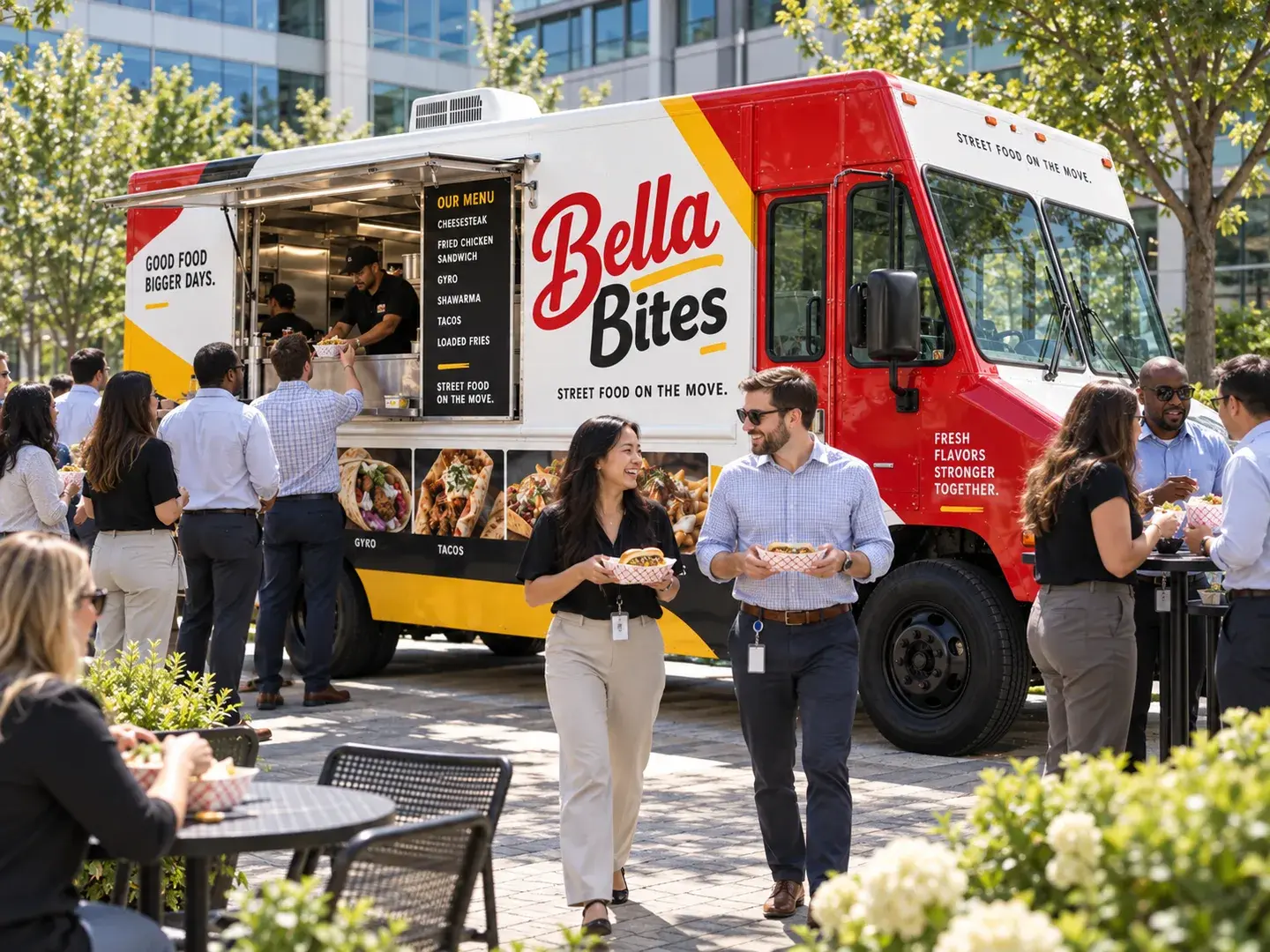
The best spot is usually a corner of a surface lot near the main entrance, off the drive aisle. Loading docks look tempting but are often busy at lunch. Fire lanes are off limits.
Garages need care. Food trucks are tall, and many garage entrances are not. Get the truck’s height from the operator and compare it with the posted clearance. Our guide on how much space a food truck needs covers garages, slopes and line space in more detail.
Choose the day people are actually in
With hybrid schedules, the day matters more than the menu. Look at badge data or just ask around to find the one or two days when the floor is fullest, and book one of those. A truck on a Friday with a third of the team at home feels like a party nobody came to.
For timing, a window from about 11:30 to 1:30 lets people come down between meetings. If you have more than one floor or team, stagger them with a calendar invite: “Floor 3 at 11:45, Floor 4 at 12:15.” It keeps the line short and saves everyone from standing outside for 25 minutes.
Decide who pays
This decision shapes the whole day. The three common setups:
Company-hosted
The company covers the food and employees order freely. This is the right call for appreciation days, milestones and client events. You get one invoice. Ask the operator how they track orders so the bill matches what was served.
Capped or voucher
Each person gets one meal or one voucher, and anything extra is on them. This controls cost and still feels like a treat. Print vouchers or use a simple list at the window.
Pay your own
The truck shows up as an amenity and people buy their own lunch. This works for recurring visits, like a monthly truck day. It costs the company nothing per meal, but some operators need a minimum in sales to make a weekday trip worthwhile, so ask.
Feeding everyone at the table
Offices are mixed crowds. Before you lock the menu, think through the dietary needs you already know about.
- Vegetarian: make sure there is at least one real main, not only fries.
- Halal: if anyone keeps halal, a fully halal truck lets them order anything instead of one item.
- Allergies: collect needs on the RSVP and send them to the operator, who should be able to say which of the FDA’s nine major allergens are in each dish (FDA (opens in a new tab)).
A truck kitchen is one small space, so ask the operator directly what they can and cannot guarantee about cross-contact.
Paperwork procurement will ask for
Larger companies and government contractors often need a vendor setup before they can pay. Ask early whether you need a W-9, a certificate of insurance or an invoice in a specific format. Sorting it two days before the event is stressful for everyone.
Getting a headcount
Operators plan food by headcount, and offices are bad at headcounts. A calendar invite with an RSVP gets you closer than a hallway poll. If the truck takes pre-orders, ask people to pick a dish ahead of time; it speeds up the line and gives you a real number.
Expect drift. Someone brings a visitor, someone’s meeting runs over. Give the operator a range and tell them which way you expect it to lean.
After the lunch
Ask a few people what worked: the time, the menu, the wait. Two or three honest answers are enough to adjust the next one. If people liked it, put the next date on the calendar while the goodwill is fresh.
Running the line on the day
Put one person from your team near the start of the line for the first half hour. They answer “is this free?” and “can I order two?” so the crew can keep cooking. For a hosted lunch, they can also check names against a list if you are capping meals.
Set trash and recycling bins right by the truck, and a table nearby if your site has none. People who have to walk back inside to eat drop napkins all the way to the elevator.
Have a weather plan
DC summers bring thunderstorms; winters bring sleet. Decide in advance what happens if the forecast turns. Options include moving the line under a covered entrance, switching to drop-off catering for that date, or rescheduling. Ask the operator which of those they offer and how much notice they need.
If the first one goes well, ask about a regular slot. Bella Bites quotes recurring office visits, and so do many trucks. A standing monthly date is easier for everyone than planning from scratch each time.
Sources
We link the pages we relied on so you can check them yourself. Rules and permits change, so confirm anything local with the office that issues them.