You see “halal” on a lot of food trucks around DC. Sometimes it means the whole kitchen. Sometimes it means the chicken. Sometimes it means the supplier said so once and nobody has checked since. As a customer, you cannot tell which from the sign.
This guide explains what the word covers, where Muslims honestly disagree, and the questions that get you a straight answer from any vendor, including us. It is a practical guide for ordering food. For a religious ruling, talk to a scholar you trust.
The word itself
Halal is Arabic for “permissible.” Its opposite is haram, forbidden. For food, the best-known rules are that pork is out entirely, as are blood, animals that died without proper slaughter, and intoxicants such as alcohol (Wikipedia: Halal (opens in a new tab)).
Meat from permitted animals like cattle, sheep, goats and chickens is halal when the animal is slaughtered the prescribed way. That method, called dhabihah, uses a sharp knife across the throat, cutting the windpipe, esophagus and jugular veins, while the slaughterer invokes the name of God (Wikipedia: Halal (opens in a new tab)). Fish and most seafood need no slaughter.
Zabiha and halal: same thing or not?
Zabiha (also spelled dhabiha) is the same Arabic root as dhabihah, so in a strict sense zabiha meat is halal meat. In everyday American use, though, people often say “zabiha” to mean something narrower: an animal slaughtered by hand, by a Muslim, saying the blessing over each animal.
That narrower use exists because of machine slaughter. In large poultry plants a rotating blade makes the cut. Scholars disagree about whether that meets the requirement. The Islamic Services of America notes that many scholars accept machine slaughter when the operator is Muslim or from the People of the Book, starts the machine with the right intention and says the tasmiyah, while others hold that each animal needs a human-directed cut. They describe it as a legitimate difference of opinion (ISA (opens in a new tab)).
So when someone asks “is it zabiha?” they are usually asking “was it hand-slaughtered?” That is a fair question, and a vendor should be able to answer it.
What a menu label can’t tell you
Even with halal meat, a truck can trip over the details. These are the places to look.
Shared grills and fryers
A truck that cooks halal chicken next to pork sausage on the same flat-top, or fries both in the same oil, has a cross-contact problem. Some customers will accept it; many will not. A fully halal kitchen avoids the question because there is no pork on board.
Cheese
Cheese is made with an enzyme called rennet. Plant-based and microbial rennets are accepted across the schools of thought, rennet from pigs is prohibited, and most scholars treat rennet from animals not slaughtered Islamically as not permissible, while a minority allow it (IslamOnline (opens in a new tab)). If you follow the majority view, cheese is worth a question. A careful vendor will know what their cheese supplier uses, or will check and tell you.
Sauces, marinades and desserts
Wine in a marinade, beer in a batter, or gelatin in a dessert can turn a halal plate into a question mark. These ingredients are less common on street-food menus, but they turn up.
Questions worth asking any vendor
Ask politely and expect clear answers. A good vendor will not get defensive; they field these questions all the time.
- Is the whole menu halal, or only some items? Which ones?
- Is there any pork, or alcohol in sauces or marinades, anywhere on the truck?
- Do halal and non-halal items share a grill, fryer or utensils?
- Who supplies your meat, and do you have paperwork from them?
- Is the chicken hand-slaughtered or machine-slaughtered? (Ask if it matters to you.)
- What rennet is in the cheese? (Only if your family follows that ruling.)
If you are booking for a mosque, an Eid party or a family with strict standards, ask for the answers in writing before the event. Then the person who booked is not stuck guessing in front of guests.
Certificates and paperwork
Halal certificates come from certifying organizations, and they cover different things. Some certify a slaughterhouse or meat supplier. Some certify a packaged product. A few certify a whole restaurant or kitchen. A truck that buys certified halal meat can show you its supplier’s paperwork, which tells you about the meat. It tells you nothing about the grill.
Certificates also expire. If paperwork matters for your event, ask for the current version and check the date, and check that it names the supplier the vendor buys from today.
None of this is an accusation. Most vendors who say halal mean it. Asking for paperwork is normal for a mosque, a school with Muslim families or a wedding where the elders will ask you first.
Where Bella Bites stands
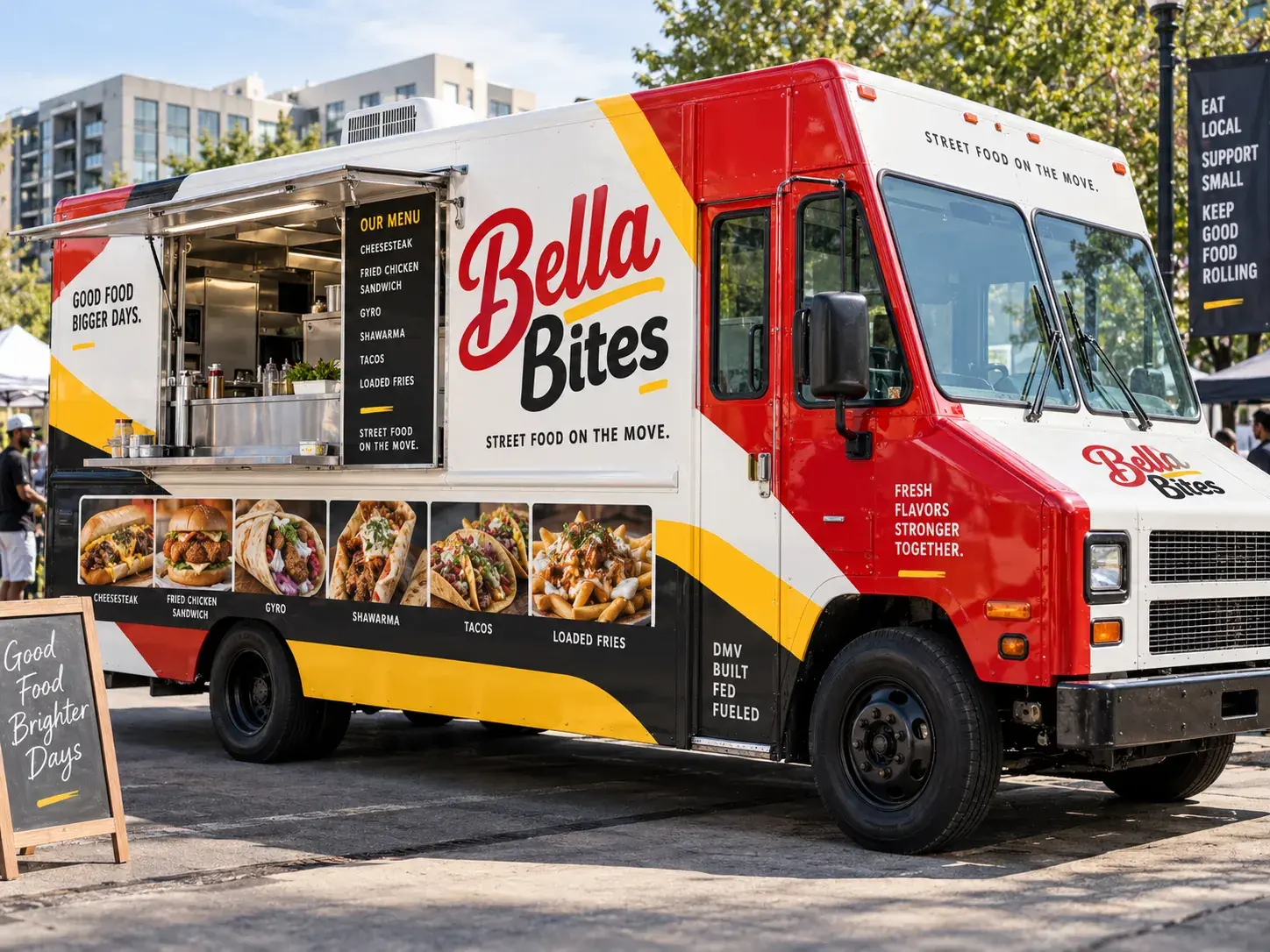
We will keep this short because it is our truck. The whole Bella Bites menu is halal, so there is no separate halal section to order from. When a family, venue or community group needs documentation, we share what we have. If your question goes deeper than that, ask us directly before you book and we will answer it straight.
Planning something where halal matters, like an Eid al-Adha party? Our pages on faith and cultural gatherings and houses of worship cover the event side.
Questions people ask
Can non-Muslims eat halal food?
Yes. Halal food is ordinary food prepared under certain rules. Nothing about it is reserved for Muslims, and plenty of people at a halal truck window are simply hungry.
Is halal the same as kosher?
No. The two traditions share some rules, like no pork and a slaughter method that drains the blood, but they differ on others, such as the blessing, the mixing of meat and dairy, and alcohol. Each community decides whether the other’s food is acceptable, so ask rather than assume.
Is seafood halal?
Fish is generally treated as halal without slaughter. Some schools of thought differ on shellfish such as shrimp, so customers who follow those views may want to skip shrimp dishes.
Sources
We link the pages we relied on so you can check them yourself. Rules and permits change, so confirm anything local with the office that issues them.