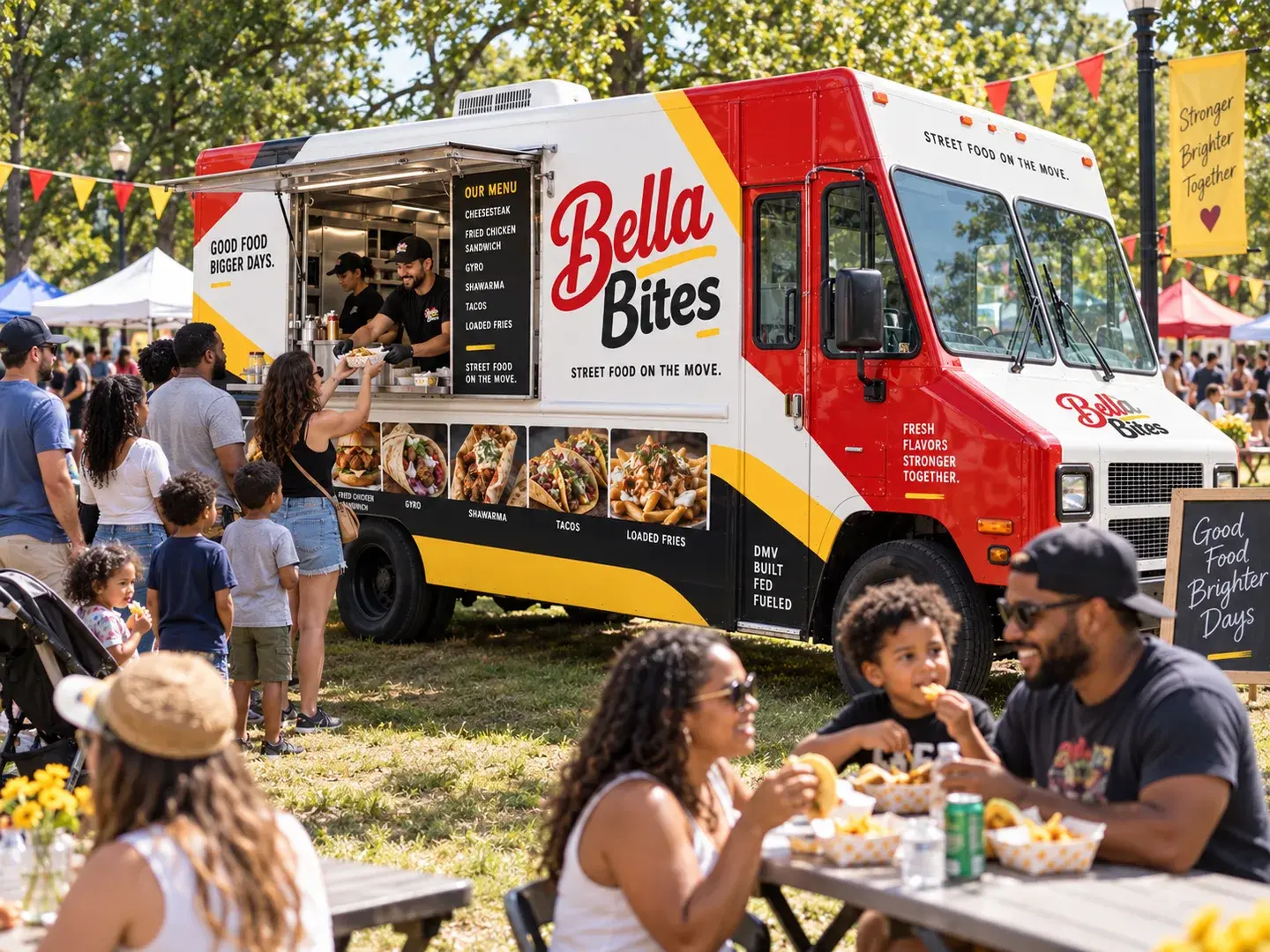
Residents like food truck nights. They get dinner without cooking, neighbors actually meet, and the community calendar gets something people show up for. For a property manager or HOA board, though, the truck raises questions about rules, liability and parking that a pizza order never does.
This guide walks through those questions so the first truck night goes smoothly and the second one is easy to approve.
Read your governing documents
Start with what your community already allows. In Virginia, the Property Owners’ Association Act gives an HOA board the power to set and enforce rules for use of the common areas (Code of Virginia § 55.1-1819 (opens in a new tab)), so the board decides whether a truck can serve on the pool lot or the clubhouse lot. Maryland and DC communities run under their own laws and governing documents, so read yours. Some declarations also limit commercial activity on individual lots, which matters for a resident who wants a truck in their own driveway. Ask the county about residential streets.
Look in the declaration, bylaws and adopted rules for words like “commercial,” “vendor,” “vehicle,” “parking” and “common area.” If the documents are unclear, many boards approve truck visits by resolution with conditions attached. Your community association attorney can tell you what your documents allow.
Put conditions on the approval
A clear approval protects the board and makes vendors easy to vet. Common conditions include:
- A certificate of insurance naming the association or property owner as additional insured.
- Proof the vendor holds current local health and vending licenses.
- A set time window and a set location.
- The vendor takes its own trash, and the area is left clean.
- No serving from public streets unless local rules allow it.
Check the local rules
Your approval does not replace the county or town’s rules. They differ a lot across the region. In the Town of Poolesville in Montgomery County, for example, a food truck on private property needs written consent from the property owner, must hold its county health permits, and may park at one location no more than four days a week (Town of Poolesville (opens in a new tab)). Fairfax County treats a one-off community food event as a temporary food event: the organizer applies to the Health Department, and the paperwork and fee must land no later than 10 days out (Fairfax County Health Department (opens in a new tab)).
A resident who would rather host at a public picnic shelter in Montgomery County has more steps, not fewer. Montgomery Parks allows a truck there only with prior approval and only for the party itself. The shelter reservation has to be confirmed first, and the truck then needs a Special Use Permit, which the permit office wants at least seven business days before the date. Expect to show proof of the operator’s county food license too, plus an insurance certificate naming M-NCPPC (Montgomery Parks FAQ (opens in a new tab)).
Ask the operator what they already hold. Established trucks deal with these questions every week and can usually tell you what applies at your address.
Choose the spot
The clubhouse lot, the pool lot or a wide stretch of private road usually works best. Avoid fire lanes, hydrants, mailbox clusters and anywhere the line would spill into the drive aisle. The clearance rules are in our guide to how much space a food truck needs.
Block the spaces with cones the night before, and tell residents not to park there. Our space guide covers slope and line space in more detail.
Who pays
Two models dominate. In a hosted event, the association or management company covers the food: a resident appreciation night, a pool opening, a new-building welcome. In a pay-your-own night, the truck comes as an amenity and residents buy their own dinner. That costs the community nothing per meal, and it is easy to repeat.
Pay-your-own nights only work if enough residents show up. Some trucks ask for a sales minimum on these visits, so ask about it before you advertise.
Tell residents, and tell them again
Turnout depends on notice. Post the date a week ahead, again the day before and again an hour before. Include the time window, the location and a link to the menu. Mention whether the food is free or pay-your-own, so nobody shows up surprised.
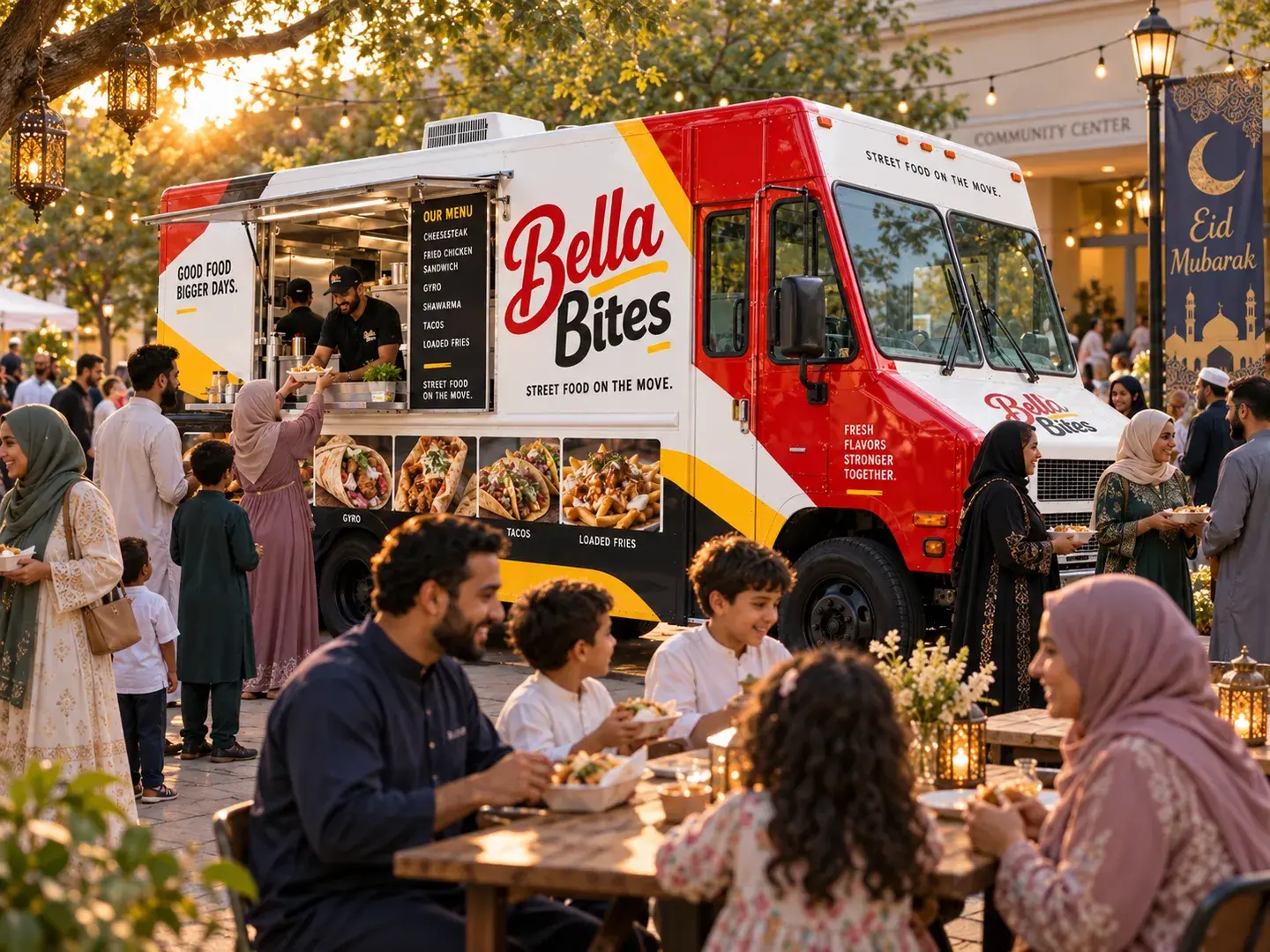
Add a note about dietary options. In a diverse community, saying up front that the menu has vegetarian dishes or is fully halal brings people out who would otherwise skip it.
A notice residents will read
Keep it short. Something like this works:
- What: food truck night, with the truck’s name and a link to its menu.
- When: the date and the serving window, such as 5:30 to 7:30 p.m.
- Where: the clubhouse lot, and which spaces will be blocked off.
- Who pays: hosted by the community, or residents buy their own.
- Dietary notes: vegetarian options, halal, allergen details on request.
- Parking: move cars out of the marked spaces by mid-afternoon.
Post it where residents look: the resident app or email list, the elevator and the mailroom.
Measuring whether it worked
Count roughly how many residents came, ask the operator how the night went from their side, and read the comments in the resident app. If turnout was thin, the fix is usually the timing or the notice, not the truck.
Make it easy for everyone to come
Pick a spot with a step-free path from the building, not a lot across a grassy hill. Put the menu at eye level and in large print next to the line, and post it online beforehand so residents with low vision can read it on their phones.
Some residents cannot stand in a line for twenty minutes. Offer a chair near the window, or let a neighbor or staff member order on their behalf, and post a small sign at the window saying so.
Make it a habit
One good night leads to the question “when is the next one?” A regular slot, monthly in warm weather or around summer block parties, is easier to approve once than to approve again each time. Some communities rotate several trucks so residents get variety.
If you want Bella Bites on the rotation, our page for apartment communities explains how we work with property managers.
Sources
We link the pages we relied on so you can check them yourself. Rules and permits change, so confirm anything local with the office that issues them.