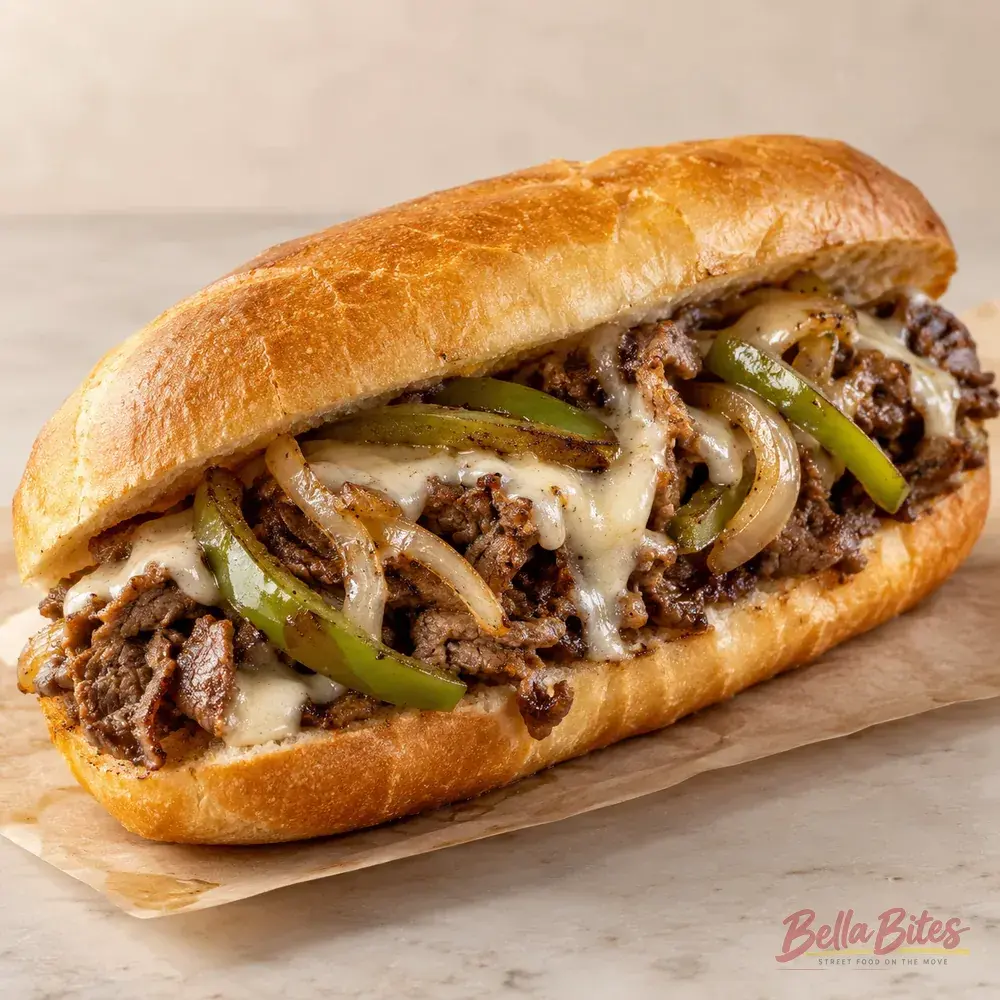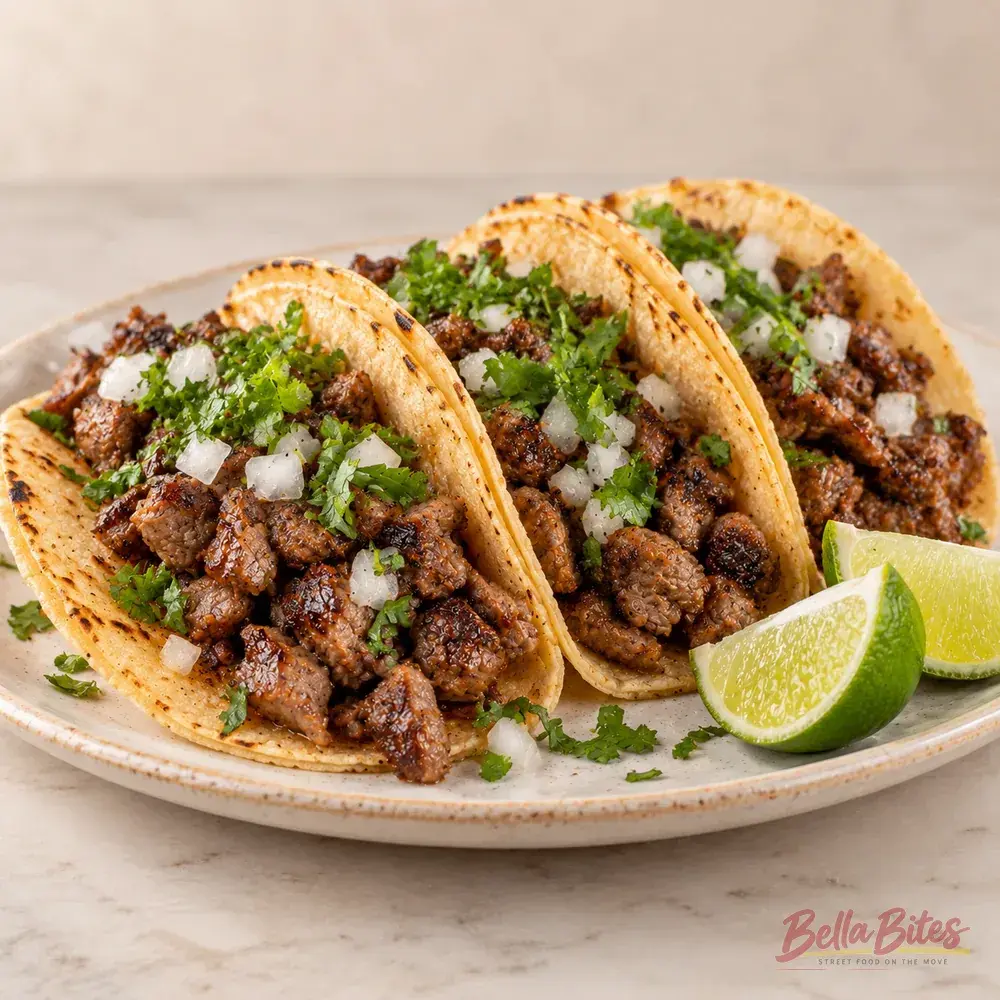
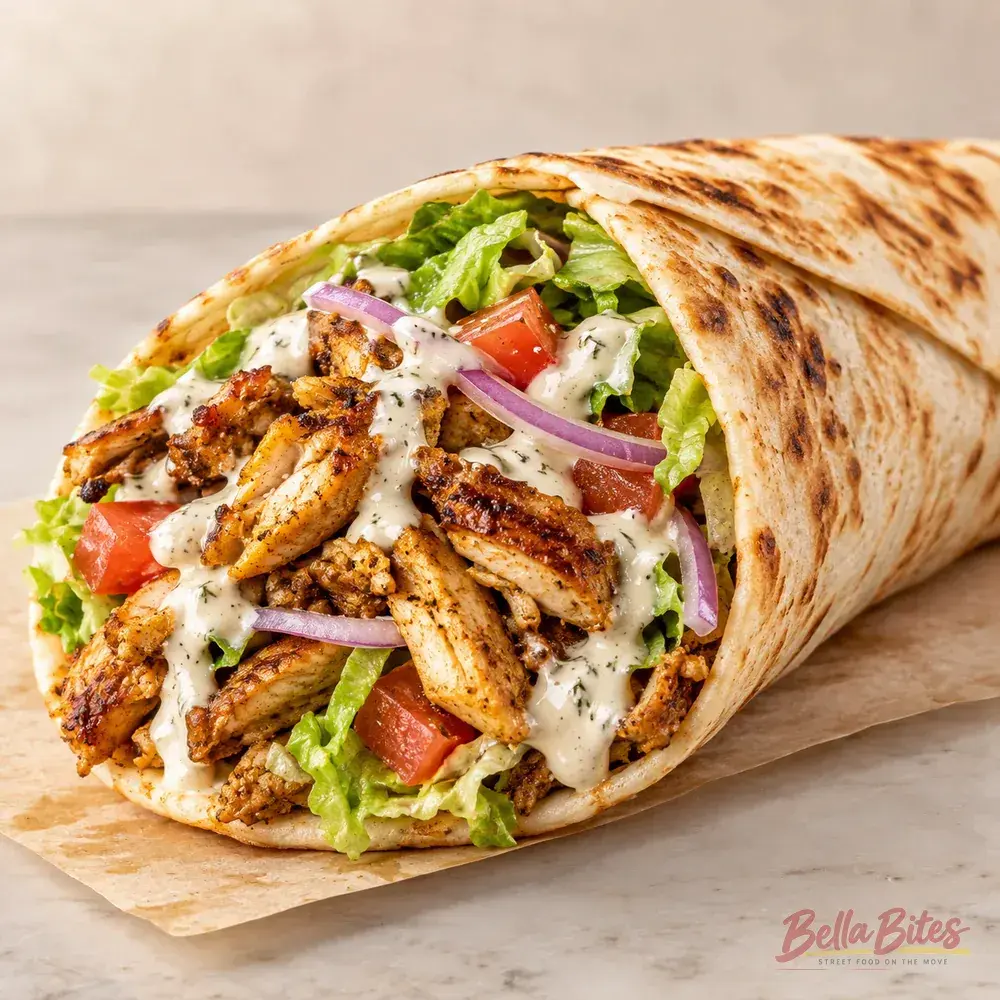
Both are meat cooked on a turning spit, shaved thin and wrapped in bread. Both show up on the same truck menus around DC. And people use the names as if they were the same sandwich.
They are related, but they taste different, and the differences are easy to learn.
The quick version
- Gyro is Greek. Shawarma is Levantine, from the eastern Mediterranean Arab world.
- Gyro usually comes with tzatziki, the cucumber-yogurt sauce. Shawarma usually comes with garlic sauce (toum) or tahini.
- Gyro toppings stay simple: tomato, onion, sometimes fries. Shawarma often brings pickles.
- In the US, gyro meat is often a ground beef-and-lamb cone. Shawarma is usually stacked slices of chicken, lamb or beef.
One family tree
Both descend from the Turkish döner kebab, meat stacked on a vertical spit that turns in front of the heat. Döner means “turning.” The Greek word gyros means “turn” and began as a direct translation of döner (Wikipedia: Gyros (opens in a new tab)). Shawarma comes from the Turkish çevirme, also “turning” (Wikipedia: Shawarma (opens in a new tab)).
The spit technique took shape in the Ottoman Empire in the 19th century, and the dish spread and changed with each place it landed (Wikipedia: Shawarma (opens in a new tab)). Mexico’s al pastor is another branch of the same tree.
The meat
This is easy to miss if you only know the American version: in Greece and Cyprus, gyros is traditionally pork, sometimes chicken. In other countries it may be lamb or beef, and typical mass-produced American gyro meat is finely ground beef mixed with lamb, pressed into a cone (Wikipedia: Gyros (opens in a new tab)).
Shawarma was traditionally lamb or mutton, and today is also made with chicken, turkey, beef or veal. Thin seasoned slices are stacked on the spit and shaved off as they cook (Wikipedia: Shawarma (opens in a new tab)). On our own truck, shawarma means chicken shawarma.
So if you need halal, “gyro” on a menu tells you nothing about the meat. Ask what it is and where it comes from.
The sauce
Gyro goes with tzatziki: thick yogurt, grated cucumber, garlic and herbs. It is cool and a little sour. In parts of Greece, gyros may come with ketchup or mustard instead (Wikipedia: Gyros (opens in a new tab)).
Shawarma goes with toum, a fluffy garlic sauce made from garlic, oil and lemon, especially with chicken (Wikipedia: Shawarma (opens in a new tab)). Tahini sauces with garlic and lemon show up next to it on plenty of menus. These sauces are sharper and more garlicky than tzatziki.
The bread and the toppings
A Greek gyro is usually wrapped in a thick, grilled pita with tomato, onion and often fries tucked inside (Wikipedia: Gyros (opens in a new tab)). Shawarma comes in pita, thin saj bread, laffa or lavash, and pickles and fries are common alongside (Wikipedia: Shawarma (opens in a new tab)).
The pickles are the giveaway. If your wrap has bright pink pickled turnips, you are eating shawarma.
How the gyro got to America
Chicago is the gyro’s American home. In the 1970s a Chicago company began mass-producing vertical rotisseries, and several Chicago-area Greek Americans say they introduced the first mass-produced gyros there in the early 1970s (Wikipedia: Gyros (opens in a new tab)). That helps explain why so many US diners serve the same ground-meat style.
Where falafel fits
Falafel often shares the menu with both. It is made from ground fava beans, chickpeas or both, mixed with herbs and spices and fried. It most likely started in Egypt, where it is called ta’amiya, and it usually goes into pita with tahini sauce (Wikipedia: Falafel (opens in a new tab)).
For a mixed group, falafel is the easy answer for vegetarians, and plenty of meat eaters order it anyway.
Wrap, plate or platter
Around DC you will see these meats served several ways: rolled in bread, laid over rice as a plate, or piled on fries. Plates are easier to share and harder to eat standing up. Wraps are the opposite.
At an event, think about where people will eat. If guests are standing and mingling, wraps win. If there are tables and chairs, plates work. For an office lunch with no truck, drop-off catering packs wraps well because they hold together on the trip.
Feeding a crowd with both
For a party, a simple rule covers most groups: one chicken option, one red-meat option and one vegetarian option. Shawarma, gyro and falafel fit that exactly.
Watch the sauces if anyone has allergies. Tzatziki is yogurt, so it contains milk. Toum is garlic, oil and lemon, and some cooks add egg white or starch to hold it together (Wikipedia: Shawarma (opens in a new tab)). Tahini is ground sesame, one of the nine major allergens on the FDA’s list (FDA (opens in a new tab)). Offering sauces on the side lets each guest decide.
Which should you order?
Want something light and garlicky that you can eat standing up? Shawarma, especially chicken. Want something richer with a cool sauce? A lamb gyro. Feeding a mixed crowd? Offer both, plus a falafel wrap for the vegetarians.
On our truck, the chicken shawarma is marinated chicken with vegetables and garlic sauce, the Greek lamb gyro is seasoned lamb with vegetables and a cool sauce in pita, and the veggie falafel covers anyone skipping meat. All three are halal, like the rest of the menu.
Questions people ask
Is gyro meat lamb or beef?
It depends where you are. In Greece it is traditionally pork or chicken. In the US the common cone is ground beef mixed with lamb. Some places, including halal trucks, use seasoned lamb or chicken instead. Ask what is on the spit.
Is shawarma always halal?
No. Shawarma comes from Muslim-majority regions, so many shops are halal, but the word alone does not guarantee it. Ask about the meat supplier and whether anything else shares the grill.
Sources
We link the pages we relied on so you can check them yourself. Rules and permits change, so confirm anything local with the office that issues them.