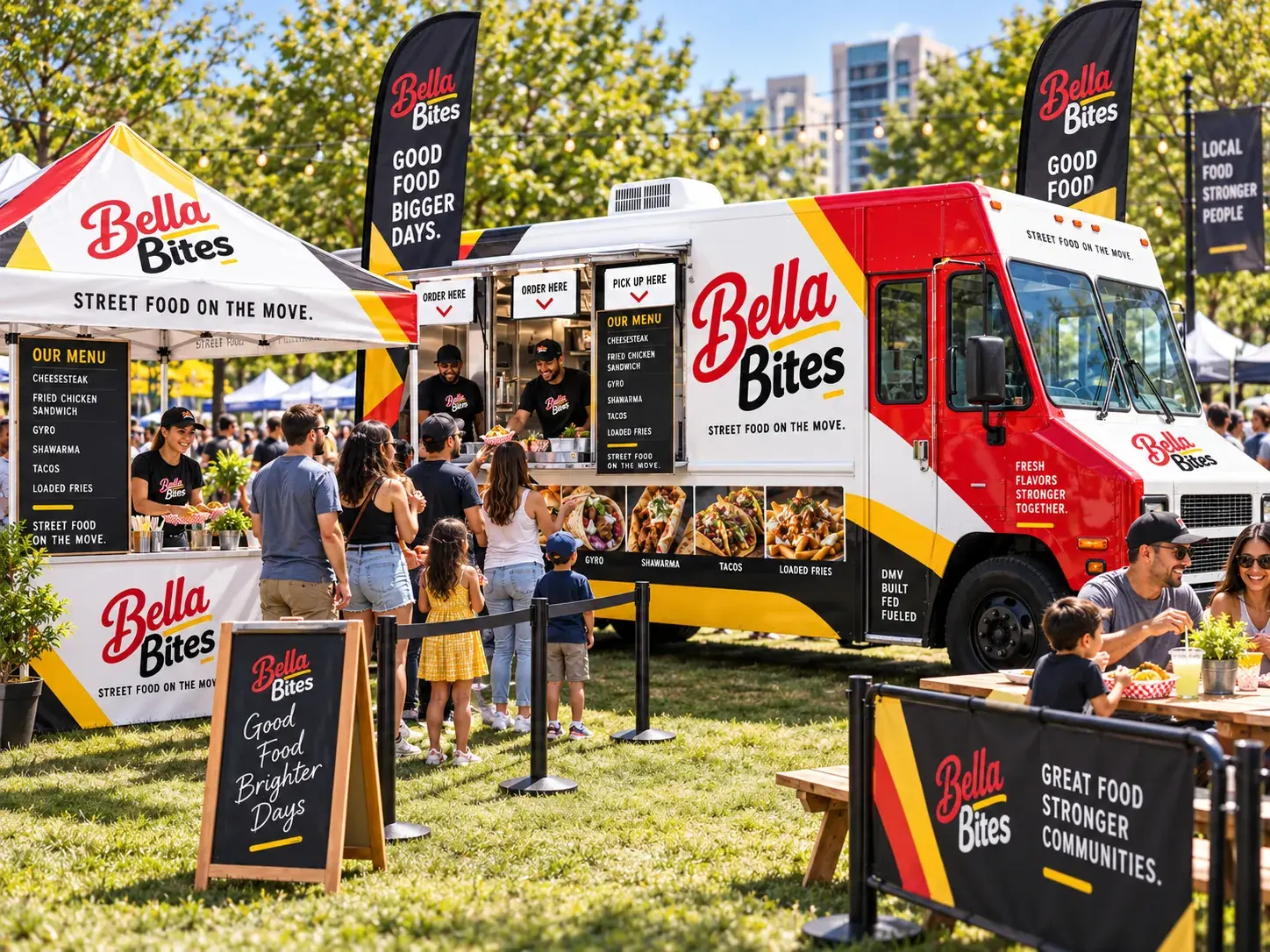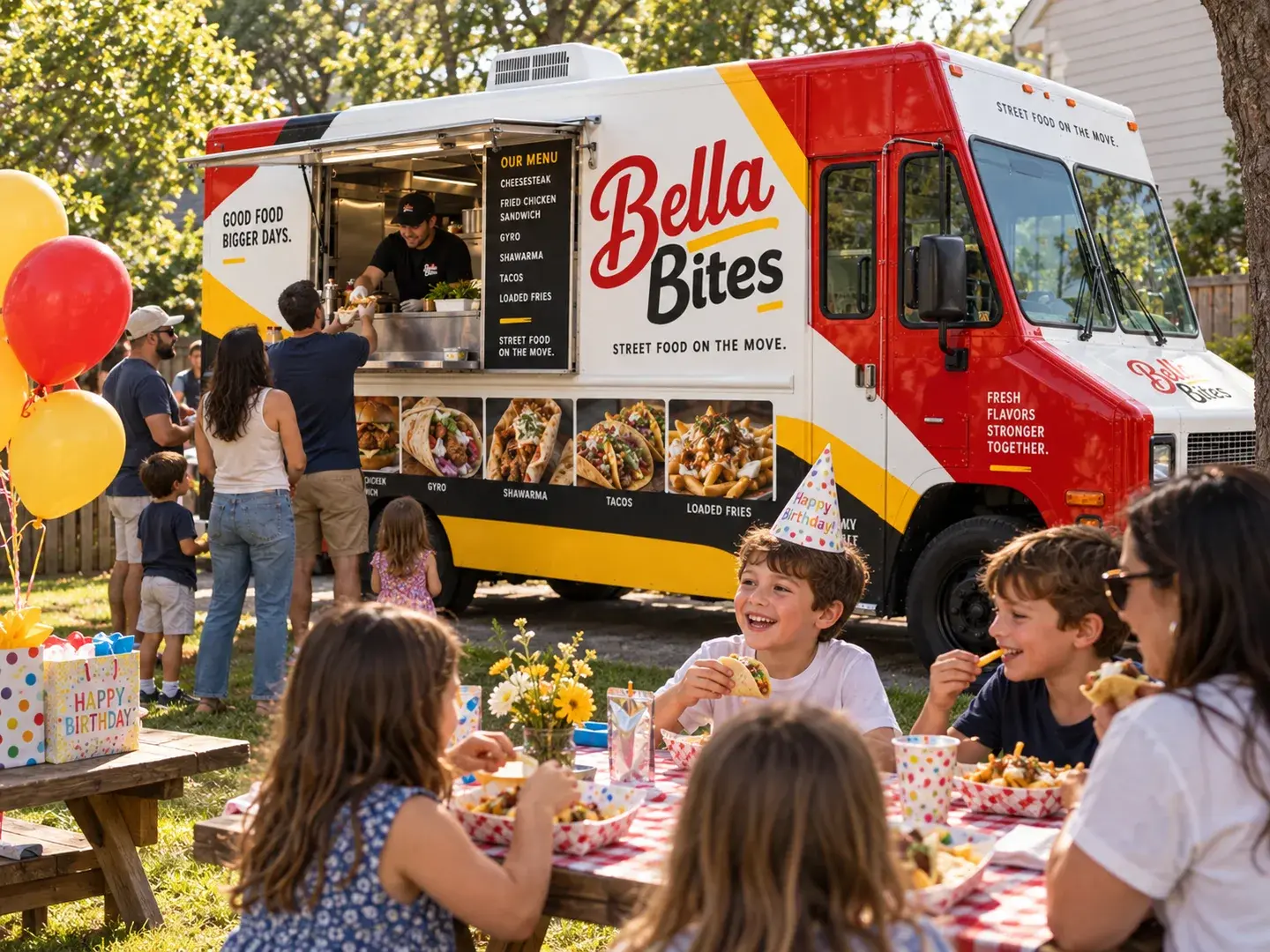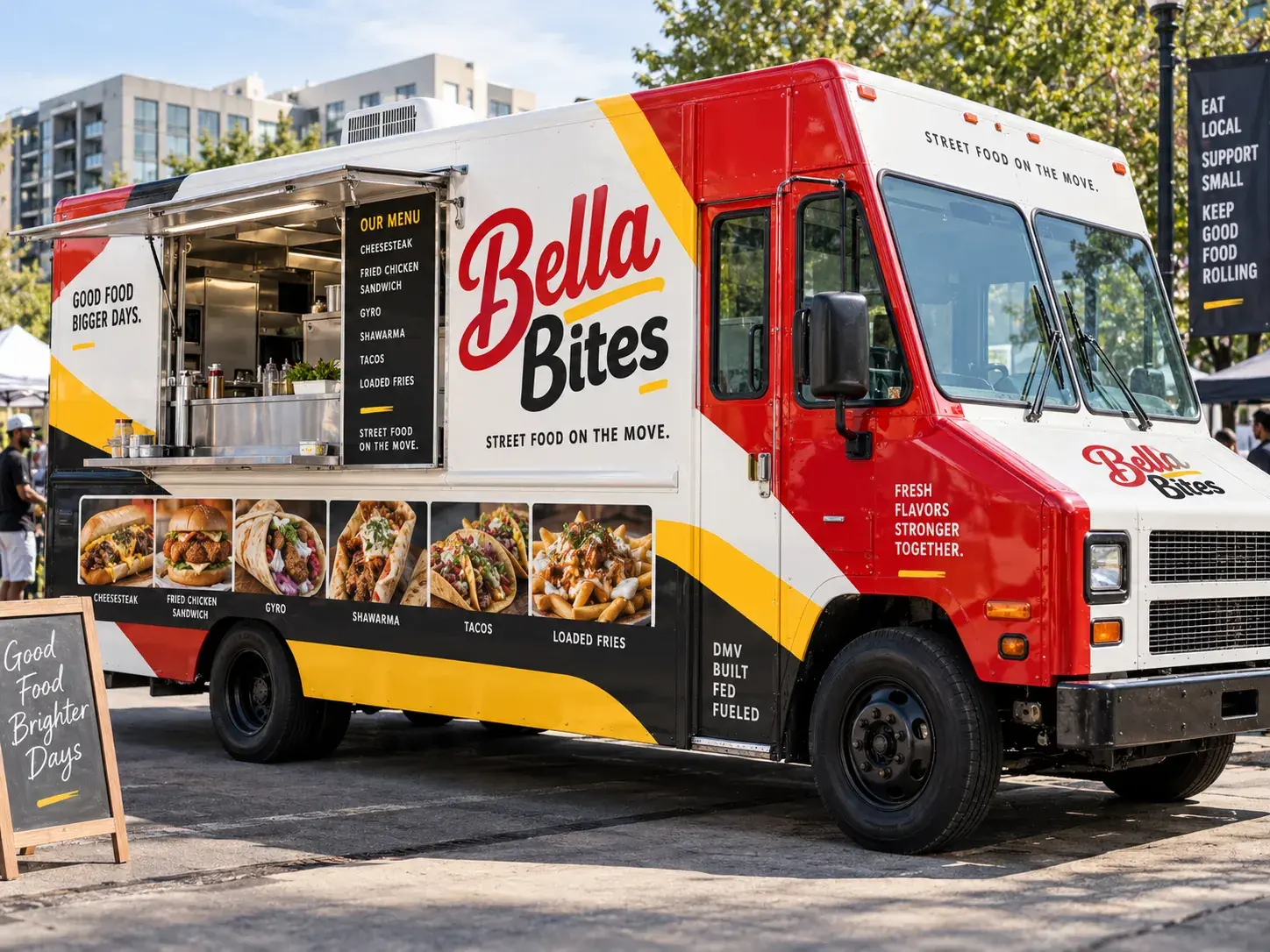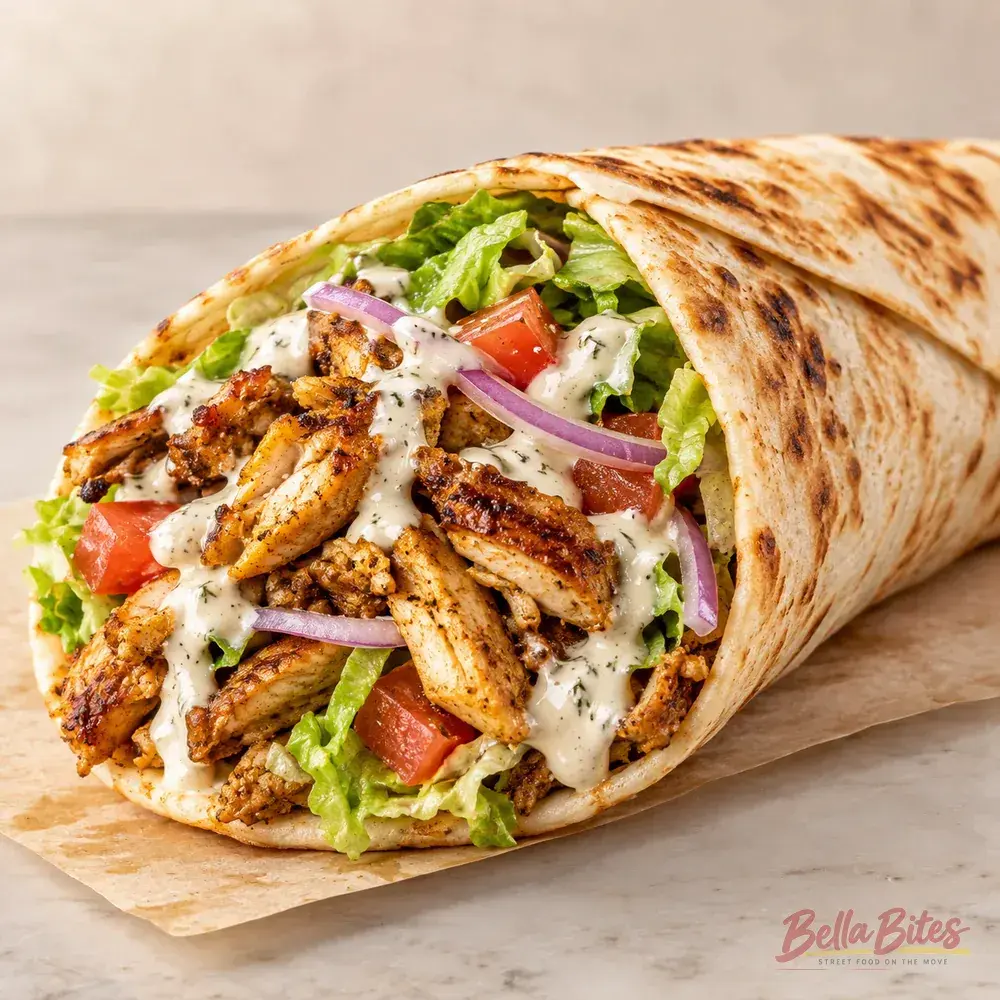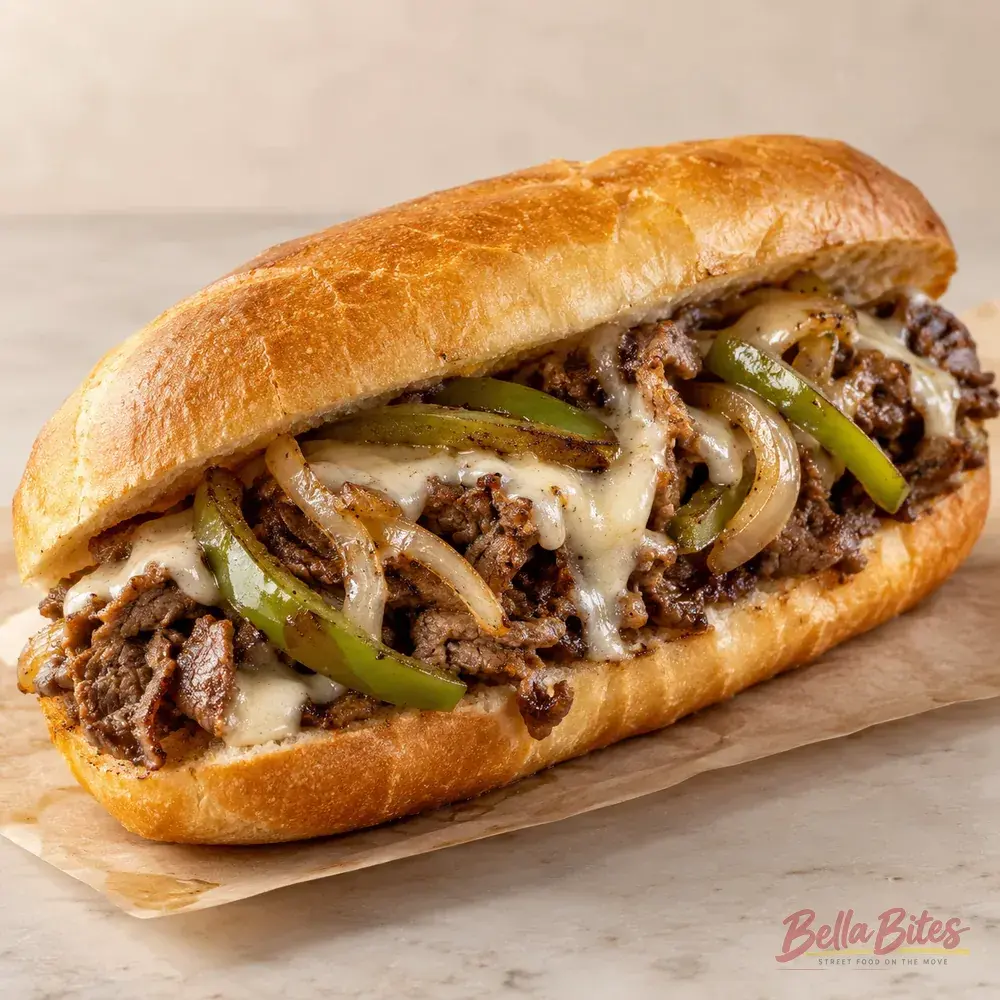
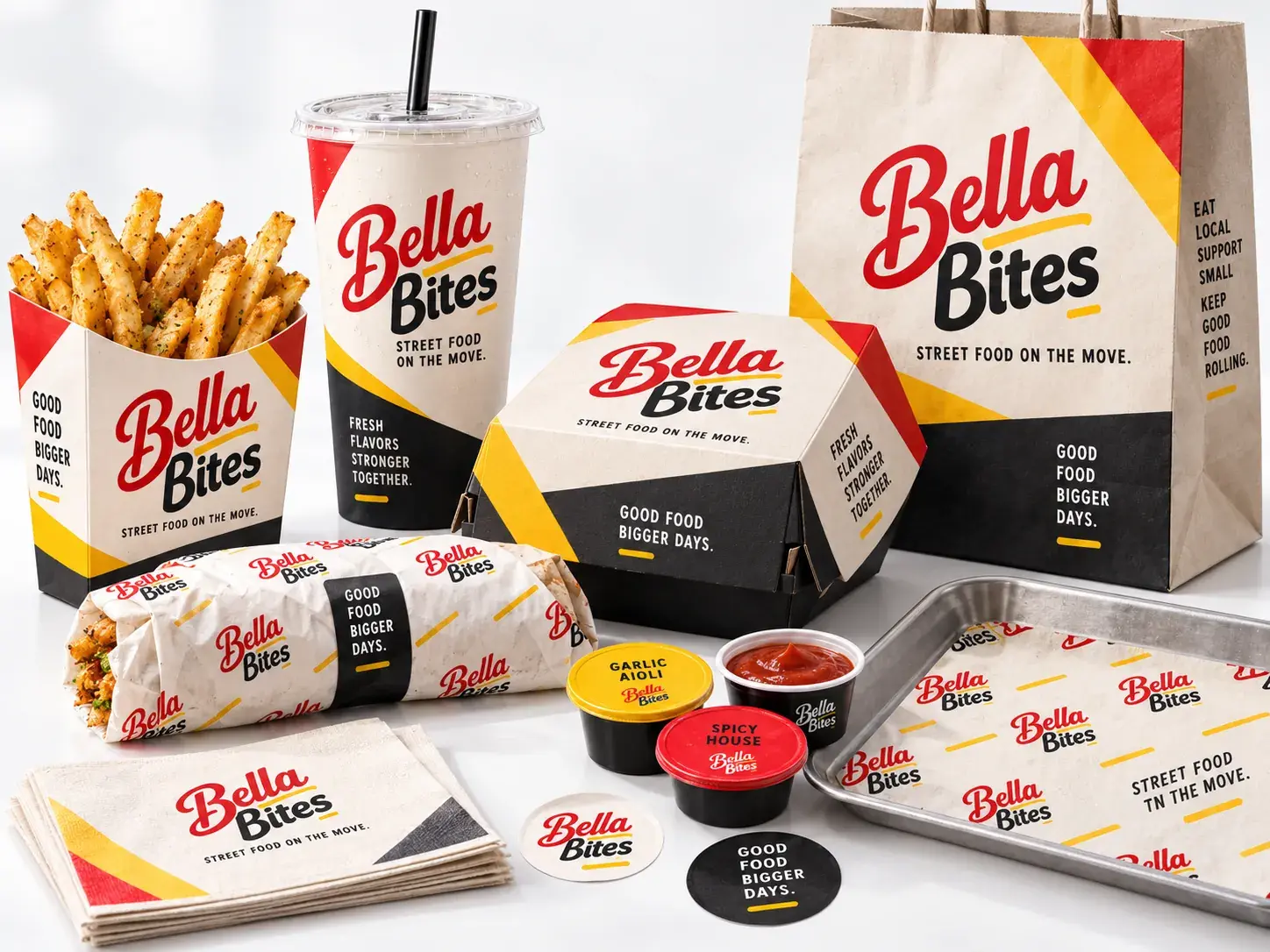
The choice depends less on the food than on the room. A truck and a drop-off order can carry the same chicken shawarma. What changes is where people eat, how long they eat for, and how much of a moment you want the meal to be.
Start with the five questions further down. The first one, whether a truck can park at all, settles a lot of events on its own.
The two options, in plain terms
With a food truck, the kitchen comes to you. It parks, opens the window and cooks each order as people walk up. Guests get food hot off the grill, and the truck becomes part of the event.
With drop-off catering, the food is cooked, packed and delivered at a set time. You put it out, people serve themselves or grab a boxed meal, and the delivery driver leaves. No parking spot needed, no line, and it works indoors.
Five questions that decide it
Answer these in order. By the third one, most events have picked a side.
1. Is there somewhere for a truck to park?
A truck needs a level paved spot about the size of two parked cars, room for a line and safe clearance from buildings. A 12th-floor conference room, a basement fellowship hall with no lot, or a rowhouse block with no legal parking all point to drop-off. Not sure? Our guide to how much space a food truck needs covers it.
2. Will people eat outside?
A truck shines when the crowd is already outdoors: a field day, a backyard, a parking-lot party. If everyone will sit inside at tables, walking out to a truck and back is a chore, especially in January. Drop-off keeps food where the people are.
3. Do people eat together or in waves?
A working lunch where everyone eats at noon suits drop-off: the food is ready when the meeting breaks. Events where people drift in over two or three hours, like an open house or a festival, suit a truck that cooks to order the whole time, so the last guest eats as well as the first.
4. How long will the food sit out?
This one is about food safety. Common guidance says perishable food should not sit at room temperature for more than two hours, or one hour above 90°F, and hot food should stay at 140°F or above (FDA: Serving up safe buffets (opens in a new tab)). For a long event, a truck cooking to order avoids the problem. For drop-off, plan to serve soon after delivery, use warmers if you have them, and put leftovers away.
5. Is the food part of the fun?
Kids love ordering at a truck window. Adults line up for it just as happily. At a birthday, a school night or a staff appreciation day, the truck gives people something to gather around. At a board meeting or a memorial reception, a quiet buffet fits the mood better.
When a truck is the better call
- Outdoor events with a few hours of serving time.
- Crowds that arrive over time instead of all at once.
- Events where guests pay for their own food.
- Celebrations where the truck itself adds to the day.
When drop-off is the better call
- Indoor meetings, trainings and office lunches with a fixed start time.
- Venues with no place for a truck to park.
- Cold or wet days when nobody wants to stand outside.
- Smaller groups where a whole truck would be more than you need.
What each option asks of you
Both options take some work from the host. The difference is when: a truck needs attention on site, and drop-off needs it before and after the meal.
If you book the truck
You find and protect the parking spot, get any property or HOA approval, and plan where the line stands. On the day, someone has to meet the truck, show the crew where to park and stay reachable by phone. After that, the crew handles the cooking and serving.
If you order drop-off
You need tables, a few serving utensils and someone to receive the delivery at the right door at the right time. Plan for plates, napkins and trash bags if they are not included, and decide who puts leftovers away. In an office building, tell the front desk a delivery is coming so the driver is not stuck in the lobby.
Questions to ask whichever you pick
- What time does the food arrive, and when is it ready to eat?
- How long is the serving window, and what happens if guests run late?
- Which dishes travel well, and which are better made fresh at a truck?
- What is included: plates, napkins, utensils, serving equipment?
- What happens if the weather turns or the headcount changes the week before?
Dietary needs travel differently
At a truck, a guest with a question can ask the cook at the window: is there dairy in the sauce, can I get it without onions. With drop-off, nobody from the kitchen is in the room, so the information has to travel with the food.
If you order drop-off, ask the caterer to label every tray with the dish name, flags like vegetarian or halal, and which of the FDA’s nine major allergens it contains (FDA (opens in a new tab)). Keep a printed ingredient list near the buffet. Put the vegetarian tray first in line, before the meat dishes run out and people start improvising.
Doing both
Some events split the difference. A conference might take drop-off for the indoor working lunch on day one and bring the truck for an outdoor reception on day two. A company might book drop-off on rainy months and the truck when the weather turns. One more use: if the forecast looks ugly the week of an outdoor event, ask whether your truck booking can switch to drop-off. Not every operator offers that, so ask before you need it.
At Bella Bites, our catering comes from the same kitchen and the same dishes as the truck, and the catering menu shows what packs well for the trip.
Sources
We link the pages we relied on so you can check them yourself. Rules and permits change, so confirm anything local with the office that issues them.